
The seven most significant course overhauls of the past decade
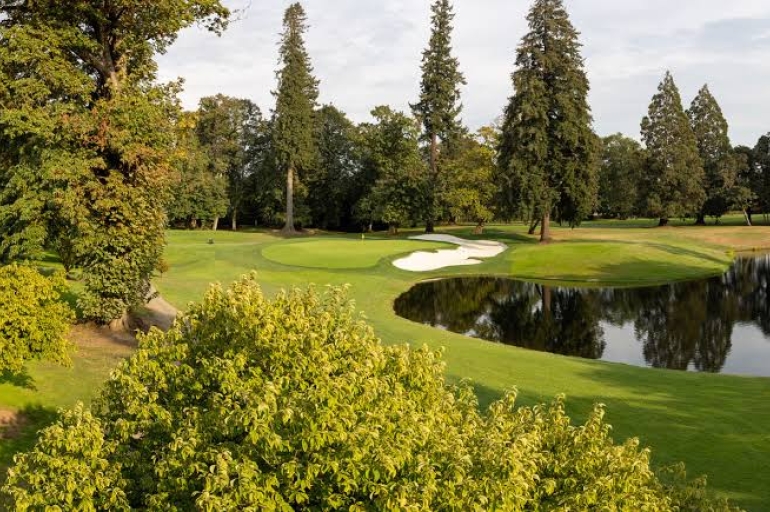
In 1965, Eugene Country Club hired architect Robert Trent Jones to renovate the greens and tees of its 1926 Chandler Egan-designed course. Despite a stunning Pacific Northwest property with holes darting through corridors of 100-foot tall conifers, Jones sensed something off about the architecture and concluded the water features were out of place, with most sitting short distances off the tee and not a concern for better players. The realization prompted a radical proposition—rather than just remodel parts of the course, he would reverse the entire routing, making every hole move in the opposite direction, placing the water closer to the greens to enhance the challenge of approach shots.
This spotlighting of the property’s strongest assets and the subsequent redesign around them gave birth to a layout more in sync with the land and the demands of the time. The reimagined version of Eugene Country Club resided inside Golf Digest’s ranking of America’s 100 Greatest Courses from 1979 through 2012 and in our top 200 until 2022. There was a better golf course on that site, and Jones found it.
Golf course design is always a combination of land, money and an idea. Most of the time these factors collaborate to produce, at worst, a perfectly functional and satisfying place to play, but occasionally these pillars wobble. The budget might be too small to make sense of a difficult piece of real estate, or perhaps the founding architectural theory turns out to be a poor fit for the environment. Even if everything comes together initially, a misguided renovation can jeopardize the original architecture.
It’s hard to define how or when a design fails to live up to its potential. Whether it’s the course’s age, routing, sense of scale or strategies, most attuned golfers can just feel if something is off, if the parts are misapplied. Over the past decade-plus, there has been a mini-wave of bold reclamations that have corrected some of golf’s biggest “misses.” These projects go beyond what’s normally called a “restoration,” which is the intended return of a golf course to a previous, historically accurate version of itself. Rather, the following are major resets that introduce novel design concepts that more effectively summon the best angels of each property. Not all are as revolutionary as Jones’ work at Eugene Country Club, but on these sites, there were always better golf courses.